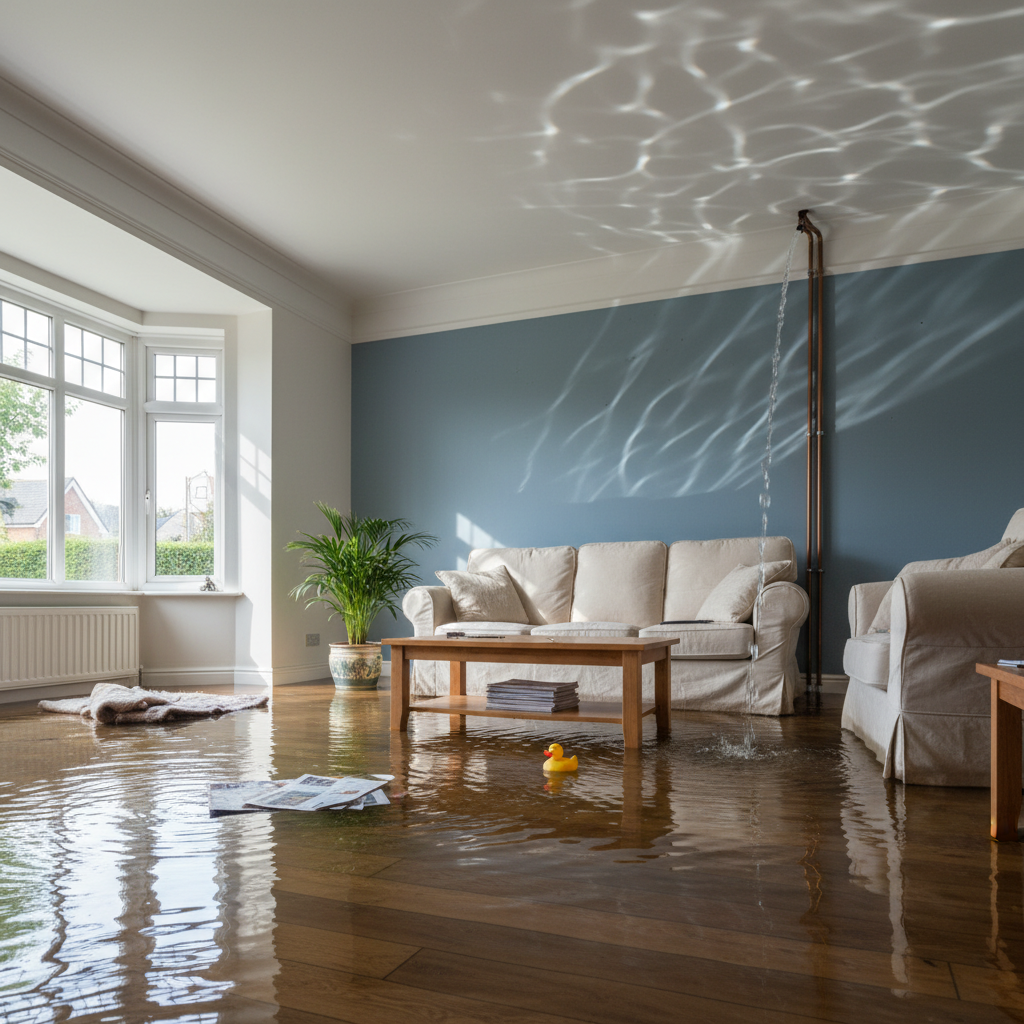
24/7 Emergency
Water damage
doesn't wait. Neither do we.
Burst pipe? Flooding? Call now. Rod answers the phone at 2am because every hour matters.
What To Do Right Now
If you're standing in water reading this on your phone, here's how to limit the damage while Rod's on the way:
- Turn off the water at the mains if it's a burst pipe. Your stopcock is usually near the front of the house or by the meter.
- Kill the power to affected areas if water is near electrical outlets. Use your switchboard - don't touch wet switches.
- Get furniture off the wet carpet if you can. Timber and metal legs will stain wet carpet permanently within hours.
- Towel up what you can. Old towels, blankets, whatever you've got. Every bit of standing water you remove helps.
- Call Rod on 0412 336 397. Day or night. He'll talk you through next steps while he's loading the van.
There's a moment of pure panic when you walk into a room and the carpet squelches under your feet. Or you come home to water dripping through the ceiling. Or you wake up at 2am to the sound of running water that definitely isn't a tap. Your stomach drops, your mind races through everything that's about to be ruined, and you think: who the hell do I call right now?
You call Rod. He's been handling water damage emergencies across Berwick, Narre Warren, Pakenham, and the wider south-east since 1996. He knows this isn't a "we'll book you in for next Tuesday" situation. When water is spreading through your home, every single hour matters. The difference between a carpet that can be saved and one that needs ripping out often comes down to how fast someone with the right gear gets there.
Why Every Hour Counts
Water damage isn't just about what's wet right now. It's about what happens next if that moisture isn't extracted fast. Here's the timeline most people don't know about:
First hour: Water soaks into carpet, underlay, and starts seeping into floorboards and subfloor. Furniture legs start staining carpet. This is your best window for a full recovery with minimal damage.
Within 24 hours: Drywall begins to swell and break down. Timber floors start warping. Furniture swells and cracks. Dyes from fabric and cardboard bleed onto carpet and surfaces.
48-72 hours: Mould starts growing. And once mould gets established in your carpet underlay or behind your walls, you've got a much bigger, much more expensive problem. Mould isn't just property damage - it's a genuine health hazard, particularly for kids, elderly family members, and anyone with respiratory conditions.
This is why Rod doesn't put water damage calls in a queue. When someone in Officer rings at midnight because a pipe has burst under the bathroom, he's getting in the van. When a family in Cranbourne wakes up to a flooded laundry after a storm, he's on the way. The gear is always ready. You can't schedule an emergency.
What Rod Does When He Gets There
First thing: work out how far the water's gone. Because water travels. It follows gravity, wicks along carpet backing, seeps through tiny gaps you wouldn't notice. The wet patch you can see is almost never the full picture. Rod uses moisture meters to find exactly where the water's reached, including areas that look bone dry on top but are saturated underneath.
Then it's extraction time. The truck-mounted equipment pulls an enormous volume of water out of carpet and underlay - we're talking industrial-grade suction that removes water you couldn't get out with a shop vac if you ran it for a week. The goal is getting the moisture content down to a level where drying equipment can handle the rest.
Depending on the severity, Rod may lift the carpet to remove or replace saturated underlay. That foam layer underneath acts like a sponge, and if it's not dealt with, it'll keep your carpet wet from below and create a mould paradise. He'll set up commercial-grade air movers and dehumidifiers to bring remaining moisture levels down to safe levels over the next day or two.
Insurance Claims - We Make It Easy
There's a good chance you'll be making an insurance claim. Rod's been through this process hundreds of times and knows exactly what insurers need. He provides detailed documentation - the damage, the steps taken, before-and-after evidence. He knows which insurance companies cover what, what they'll push back on, and how to present the work so your claim goes through smoothly.
Here's something most people don't realise: insurers actually prefer that you call a restoration professional immediately rather than waiting for their assessor. Quick action reduces the total claim cost because it prevents secondary damage. So by calling Rod first, you're helping your claim, not jumping the gun. He'll tell you what to say to your insurer and give you everything they need for the paperwork.
What Causes It - And Why the South-East Cops It
Burst pipes are the number one call, particularly in winter across Berwick, Beaconsfield, and the newer estates in Clyde and Clyde North. Hot water systems failing is another common one - especially the older units in established homes in Narre Warren and Endeavour Hills. Dishwasher and washing machine hoses letting go catches people by surprise more often than you'd think. And storm damage after heavy rain, especially in areas with dodgy drainage or older roofing.
The newer estates in Clyde North and Officer get their share too - sometimes a construction defect that doesn't show up for a year or two, sometimes a fitting that wasn't quite right. Doesn't matter what caused it. What matters is getting the water out before it does more damage than it already has.
Mould Prevention Is the Real Game
Here's something most people don't realise: the water damage itself is often the cheaper problem to fix. It's the mould that follows untreated water damage that really costs money and puts your family's health at risk. Mould spores are everywhere - they're just waiting for the right conditions, and a damp carpet or wet wall cavity is exactly what they need.
Professional water damage restoration isn't just about making things dry. It's about making them dry fast enough that mould doesn't get a foothold. That's the difference between a $500 extraction job and a $15,000 mould remediation and carpet replacement. It's the difference between sleeping in your own bed tomorrow night and moving out for two weeks while the house is treated.
Rod treats mould prevention as the primary goal of every water damage job. Fast extraction, proper drying equipment, and follow-up moisture checks to make sure levels are where they need to be. If he thinks there's a mould risk that needs specialist attention, he'll tell you straight. He won't pretend it's fine if it's not.
Why People Trust Rod at 2am
When your house is flooding, you don't want to talk to a call centre. You don't want to leave a message and hope someone gets back to you by morning. You want to talk to the actual bloke who's going to show up with the equipment and fix it. That's Rod. He answers his own phone, he'll talk you through the immediate steps while he's loading up, and he'll be at your door in Berwick, Pakenham, Hallam, Hampton Park, or anywhere across the south-east as fast as traffic allows.
Nearly thirty years of this means there's not much that fazes him. Flooded basements, overflowing toilets, roof leaks that've been slowly soaking a ceiling cavity for months. And because it's his own business - not a franchise, not a company with shareholders - he treats your home like he'd treat his own. That matters when you're standing in your pyjamas at 3am watching someone work in your house.
Frequently Asked Questions
Do you really answer the phone 24/7?
Should I call my insurance first or you first?
Can waterlogged carpet be saved?
How much does emergency water damage restoration cost?
How do I know if I have mould after water damage?
Putting it off
won't make it
cleaner.
The longer you wait, the deeper the dirt goes. Whether it's carpets that haven't been touched in years or a stain you've been pretending isn't there - we've seen worse. We'll sort it.
Free quote. No obligation. No judgment.